





– MahaAgri AI Policy Showcased at the Global Level
New Delhi :- The Government of Maharashtra is making concerted efforts to bring about comprehensive prosperity in the agriculture sector — including food security, resilience to climate change, and women empowerment — with the help of Artificial Intelligence, Chief Minister Devendra Fadnavis said today. He emphasized that the use of Artificial Intelligence should not remain limited to exhibitions and discussions but must reach large sections of the population.
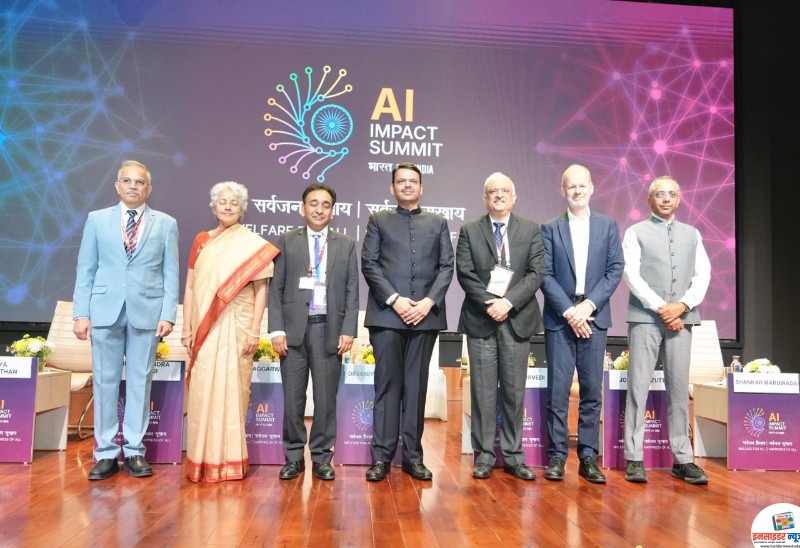
He was speaking at the panel discussion on “AI in Agriculture” at the India AI Impact Summit 2026, currently underway at Bharat Mandapam in New Delhi. Cultural Affairs and Information Technology Minister Adv. Ashish Shelar and Fisheries and Ports Minister Nitesh Rane were present on the occasion.
The session was attended by Chief Secretary Rajesh Agrawal; Secretary, Union Ministry of Agriculture and Farmers Welfare, Devesh Chaturvedi; Agriculture Secretary Vikas Chandra Rastogi; Chairperson of M. S. Swaminathan Research Foundation Dr. Soumya Swaminathan; Vice President (South Asia) of World Bank Johannes Zutt; and Co-founder & CEO of EkStep Foundation Shankar Maruwada, among others.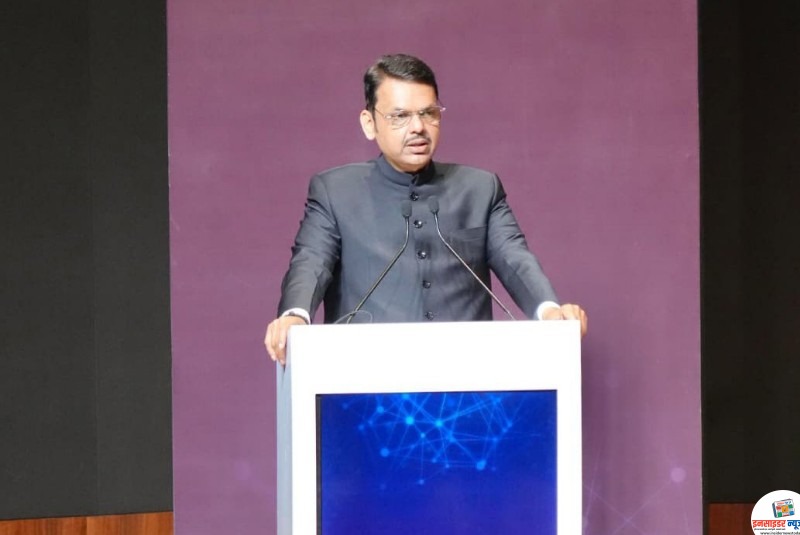
Chief Minister Fadnavis stated that the Maharashtra Government is ready to collaborate with the Government of India, global research institutions, and investors to transform farmers’ lives with the help of new technologies.
AI’s Role in Addressing Agricultural Challenges
He noted that agriculture across the world currently faces multiple challenges, putting pressure on food security. These include climate uncertainty, declining groundwater levels, soil degradation, supply chain disruptions, and volatility in global markets. In such circumstances, Artificial Intelligence can play a vital role.
He further observed that for many countries, agriculture is not merely an economic issue — it is closely linked to food security, social stability, economic independence, and national security. India has long recognized this importance. Under the leadership of Prime Minister Narendra Modi, the India AI Mission gives significant emphasis to the agriculture sector, focusing on technology adoption, service delivery, and inclusivity.
Approximately half of India’s population is directly or indirectly dependent on agriculture. However, only a small section has access to timely information about climate change, input costs, market prices, and financial services. The existing system has limitations in providing rapid and necessary information. Artificial Intelligence can help bridge this gap by offering both backward and forward linkage information — including data on climate changes, irrigation, fertilizer supply, price fluctuations, and supply chains.
Trust, Data and Governance are Crucial
Clarifying that Artificial Intelligence is not a magic wand, Chief Minister Fadnavis stressed that AI models must be built on reliable data, good governance, and accountability to the people, as emphasized by Prime Minister Narendra Modi. Without trust, agricultural services cannot be effectively delivered, he said.
MahaAgri AI Policy and Digital Platform
The Chief Minister underlined that AI in agriculture must reach millions of farmers and not remain confined to seminars and demonstrations. To this end, the Maharashtra Government has adopted the MahaAgri AI Policy — an open and interoperable framework.
Based on this policy, a multilingual mobile platform has been developed that provides personalized advisory services, real-time market information, weather alerts, and guidance on various government schemes. The overwhelming response from farmers indicates their readiness to embrace Artificial Intelligence.
The government aims to develop AI-based testing, integration, and crop samples while integrating all agriculture-related data to ensure that this data-driven approach leads to tangible development for farmers.
Appreciation for Maharashtra’s Initiatives
Devesh Chaturvedi appreciated Maharashtra’s leadership in AI and technology adoption, particularly highlighting the Farmer ID initiative and the digital crop survey conducted by the Agriculture Department. He noted that through the Bharat Vistar platform, Maharashtra has begun delivering AI-based services to farmers, providing information ranging from weather and seeds to crop care, fertilizers, irrigation, and markets. Currently available in English and Hindi, these services will soon expand to all languages.
Dr. Soumya Swaminathan emphasized the importance of responsible technology use and highlighted the significant role of women in agricultural transformation. Technology, she noted, is neither inherently good nor bad — its impact depends on how it is used.
Recalling the vision of her father, Dr. M. S. Swaminathan, she said the Green Revolution was not only about seeds but about a comprehensive ecosystem — including agricultural science centers, irrigation, fertilizers, education, training, and farmers themselves. Its success ultimately depended on farmers’ acceptance. Therefore, women farmers must not be overlooked, especially since land ownership in their names remains limited, though the situation is gradually improving. At the early stages of technological deployment, it is vital to ensure that women’s data and participation are properly incorporated.
Additional Chief Secretary (Agriculture) Vikas Chandra Rastogi moderated the session and provided information about various digital and AI-based initiatives being implemented by the Maharashtra Agriculture Department.